

Key Takeaways:
-
Premature skin aging is driven by sun exposure, smoking, pollution, and lifestyle habits.
-
You can’t completely reverse aging, but you can reduce wrinkles and slow visible signs of aging.
-
Daily sunscreen and retinoids are two of the most evidence-backed strategies to prevent wrinkles.
-
The best products for aging skin support collagen, hydration, and antioxidant protection.
Learning how to reverse aging may seem like something straight out of a fairytale. Getting older is a fact of life, but there are ways to slow the visual signs of premature skin aging that can actually make you look older than you are. Adopting healthier skincare habits, consistently wearing sunscreen, and choosing the right products can help reduce those telltale signs like wrinkles, hyperpigmentation, dry skin and more.
Read on to find out why premature skin aging happens, which lifestyle habits speed it up, and how to prevent wrinkles with non-invasive products.
What Is Aging?
As we age, we experience a variety of physiological changes due to intrinsic and extrinsic factors. Intrinsic aging refers to the natural biological process of aging determined by a person’s genetics. Extrinsic aging is influenced by external factors like air pollution, smoking, drinking, poor nutrition, and sun exposure.
While some signs of aging, like wrinkles and gray hair, are more obvious because we can see them, aging also occurs on a cellular level. Cells are the building blocks of our tissues, and over time, they become larger and less able to divide and multiply. Waste products also build up in the tissues, making them more rigid. It also becomes harder for oxygen and other nutrients to help cells and tissues regenerate. Meanwhile, the production of collagen and elastin slow down, resulting in thinner, drier, less supple skin. Fat distribution also changes, decreasing in the face and contributing to weakening and thinning of the skin.
At What Age Does Premature Skin Aging Start?
According to some research, some visible signs of facial aging can begin in the 30s (or earlier), with early changes often appearing around the eyes and forehead. This is when collagen production starts to slow and the skin gradually becomes less elastic over time. You may start noticing fine lines, sun spots, dry skin, sagging, and, for some people, changes in hair thickness.
Although aging is inevitable, certain factors like diet, sun protection, and your skincare routine, can either speed up or slow down the process.
Is It Possible To Reverse Wrinkles and Other Signs of Premature Skin Aging?
Completely reversing skin aging is not currently possible, but many visible signs of premature skin aging can be improved with consistent, evidence-based treatments.
While you can’t turn back biological time, research shows that certain skincare ingredients, including retinoids, antioxidants like vitamin C, and daily broad-spectrum sunscreen, can stimulate collagen production, improve skin texture, and reduce the appearance of fine lines over time.
How To Slow Down Premature Skin Aging
We all age, but premature aging is when it happens too quickly. Many of the contributing factors to premature aging are preventable, ranging from following a poor diet to not drinking enough water. By implementing the following 8 healthy lifestyle factors, you can help stop and prevent further damage from premature aging.
1. Healthy Diets
Following a well-varied, nutritious diet is one of the most important things we can do to support skin health and slow premature skin aging. According to researchers, your anti-aging diet should consist of plenty of antioxidants, phytochemicals, healthy fats, quality proteins, vitamins, and minerals. These nutrients help protect against oxidative stress, support collagen production, and maintain the skin barrier, all of which play a role in premature skin aging.
Aim to include watercress, which helps to oxygenate the skin, red bell pepper, which may protect against skin damage, and broccoli, which is an anti-inflammatory veggie full of vitamin C. Other key nutrients for aging include:
-
Leafy greens like spinach and kale
-
Nuts
-
Avocado
-
Sweet potatoes
-
Pomegranates
You may also benefit from foods rich in omega-3 fatty acids, such as salmon, flaxseed, chia seeds, and walnuts, which have anti-inflammatory properties and may help strengthen the skin barrier and improve hydration.
Fermented foods like yogurt, kefir, and sauerkraut, along with high-fiber foods like legumes and whole grains, may help support the gut-skin connection by promoting a healthy microbiome.
Following a Mediterranean diet has also been associated with healthier aging at the cellular level, including reduced inflammation and improved skin resilience. This eating pattern emphasizes vegetables, fruit, legumes, olive oil, fish, whole grains, nuts, and seeds.
2. Avoid Smoking
You may already know that smoking is bad for your heart and lungs, but it’s just as bad for your skin. Studies have referred to smoking as an aging accelerator, both directly by triggering inflammatory responses, and indirectly by increasing the likelihood of developing diseases where smoking is a recognized risk factor.
Smoking is toxic for cells and results in biophysical changes to skin, especially regarding thickness and density. It has been shown that smokers have fewer collagen and elastin fibers in the dermis resulting in skin becoming slack, hardened, and less elastic.
3. Use a Retinoid
Retinoids, like those found in Foundation Skincare Night Renewal Cream, are widely used to improve signs of premature skin aging, including fine lines, uneven texture, and discoloration. Retinoids help support collagen production and speed up skin cell turnover, which can smooth the look of fine lines over time.There is also evidence that using retinoids consistently can help fade dark spots from sun damage and soften rough patches of skin.
It is important to be patient with results, though, which can take three months or longer to appear. Retinoids should always be used with a broad-spectrum, mineral-based sunscreen to protect your skin from UV damage because this product can make your skin more sensitive to the sun.
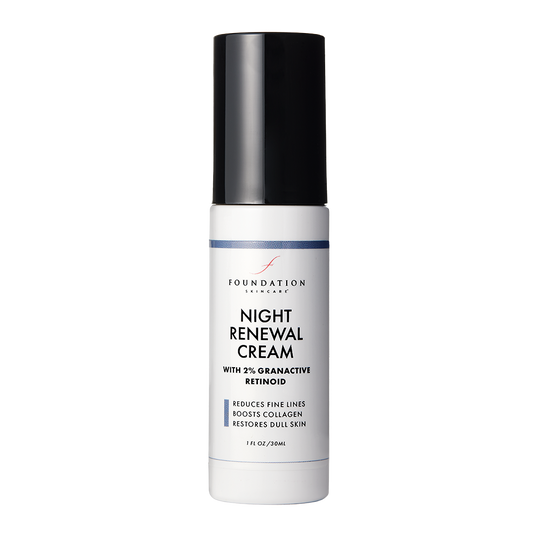
Night Renewal Cream
• Anti-aging defense, moisturizer
• Improves fine lines, skin texture
4. Exercise Regularly
Having a regular exercise routine can help keep skin looking young and healthy by increasing blood flow, which sends oxygen and nutrients to skin cells and helps eliminate toxins.
One study from Canada found that adults who exercised regularly had several skin markers that looked more “youthful,” including differences in epidermal thickness and higher measures of mitochondrial function, compared with sedentary peers.
5. Daily SPF & Moisturizer
Spending too many days in the sun without sun protection can wreak havoc on your skin, exacerbating signs of aging and putting you at risk for developing skin cancer. You should always apply a broad-spectrum, water-resistant sunscreen with an SPF of 30 or higher (we recommend SPF of 50). Broad-spectrum sunscreen provides protection from both UVA and UVB rays, which are equally as harmful for your skin.
Sun damage is also capable of decreasing your skin's ability to lock in moisture by breaking down the natural hyaluronic acid that holds water in your skin, which is why using a moisturizer and hyaluronic acid in the morning and night should be a key component to your skincare routine. You may also want to consider taking a supplement that can further protect your skin from sun damage like Foundation Skincare Spectrum, which helps protect the skin against sun damage and skin cancer and supports skin renewal.
If you are already noticing the signs of sunspots or hyperpigmentation, you may want to add Foundation Skincare Azelaic Acid 14% to your routine. This daily essential cream reduces skin inflammation and redness while lightening sun damage, age spots, and other forms of hyperpigmentation. Foundation Skincare Azelaic Acid has the highest concentration of azelaic acid without a prescription, but is gentle enough so it won’t dry out or irritate skin.
6. Prioritize Anti-Aging Skincare Products
Along with a powerful sunscreen and daily moisturizer, other anti-aging skincare products to consider include niacinamide, which supports the skin barrier and helps improve the appearance of photodamaged skin. . Foundation Skincare Niacinamide Lotion 10% also includes hyaluronic acid to hydrate, moisturize, and prevent irritation and has built-in anti-inflammatory properties to protect and treat skin while minimizing the appearance of pores and increasing ceramide production.
Another superstar ingredient is vitamin C, an antioxidant that protects skin cells from harmful free radicals while reducing redness and inflammation. Foundation Skincare Vitamin C 20% combines vitamin C with a hydrating base to moisturize, brighten, and protect your skin without drying or irritation while encouraging collagen production to reduce the appearance of fine lines and wrinkles.
Foundation Skincare Firming Neck Cream is one more product that can provide long-term anti-aging benefits with consistent use. Specifically formulated to treat the delicate skin on your neck and décolletage, the neck cream is enhanced with advanced peptide growth factors and natural moisturizing agents to help lift, strengthen, hydrate and firm loose or sagging skin.
7. Stay Hydrated
Improving your skin’s hydration levels is another way to keep skin healthy and rejuvenated. Drinking the recommended six to eight glasses a day can improve blood flow in the skin and body and provide your cells and tissues with the nutrients they need, as they are mostly made of water. You can help your efforts by incorporating foods high in water to your diet, such as cucumbers, watermelon, and zucchini. Also be sure to limit alcohol and sugar, which contribute to dehydration and inflammation.
8. Cleanse Gently
When it comes to slowing down the signs of aging on your skin, aim for gentleness. Using heavy-duty exfoliators too often or scrubbing too hard is abrasive on skin, causing chronic inflammation, dehydration, and ultimately accelerates the aging process. Instead, cleanse your skin gently and follow up with a skincare regimen designed to support healthy skin from the inside out.
The Bottom Line
It’s never too late to start taking care of your skin. Press the pause button on aging by investing in clinically-proven ingredients with long-term success in mind in lieu of overhyped fads that promise quick results with little to no proof.
Here’s what you should know:
-
Premature skin aging is driven more by external damage than by chronological age alone. Sun exposure, smoking, and chronic inflammation accelerate wrinkles and hyperpigmentation.
-
You can’t fully reverse aging, but you can reduce wrinkles and slow further damage. Evidence-backed ingredients like retinoids, vitamin C, and sunscreen can make a noticeable difference.
-
Daily SPF is the most effective way to prevent premature skin aging. Consistent sun protection helps preserve collagen and reduce visible photoaging.
-
The best products for aging skin support collagen, hydration, and antioxidant defense. A consistent aging skincare routine delivers better long-term results than short-term trends.
Find out more about how to preserve the health of your skin and hair at the FS Journal.
Related Articles: 8 Anti-Aging Skincare Myths You Should Know, Can You Slow Down Signs of Aging with Skincare?, How to Care for Your Décolletage
References:
-
Crane JU, et al. (2015). Exercise-stimulated interleukin-15 is controlled by AMPK and regulates skin metabolism and aging. https://pmc.ncbi.nlm.nih.gov/articles/PMC4531076/
-
Nicita-Mauro VI, et al. (2008). Smoking, health and ageing. https://pmc.ncbi.nlm.nih.gov/articles/PMC2564903/
-
Pradhan SN, et al. (2024). Retinoids — A unique ingredient for skin rejuvenation employing novel drug delivery systems. https://japsonline.com/admin/php/uploads/4265_pdf.pdf
-
Swift AR, et al. (2020). The Facial Aging Process From the “Inside Out”. https://pmc.ncbi.nlm.nih.gov/articles/PMC8438644/
-
Tranchida NI, et al. (2025). Potential Role of Dietary Antioxidants During Skin Aging. https://pmc.ncbi.nlm.nih.gov/articles/PMC12046069/


