


Key Takeaways:
- When comparing azelaic acid gel vs. cream, the main differences boil down to texture, absorption, and skin type compatibility.
- Azelaic acid gel is lightweight and fast-absorbing, making it a better fit for oily or acne-prone skin, but it may cause dryness or irritation.
- Azelaic acid cream is more hydrating and gentle, making it ideal for dry, sensitive, or redness-prone skin.
- The benefits of azelaic acid cream include reduced irritations and dryness and compatibility with sensitive skin.
With potent anti-bacterial and anti-inflammatory properties, azelaic acid is one of the most highly touted skincare ingredients for those dealing with skin conditions like mild rosacea, acne, and hyperpigmentation. In the past, products containing this multi-tasking ingredient were only available with a prescription. These days, azelaic acid is much more accessible, but not all products are created equally.
We’ve asked Dr. Anthony Nuara, MD PhD FAAD, to explain the difference between azelaic acid gel vs. cream and how to choose the right product for your skin.
Azelaic Acid’s Role in Skincare
A member of the dicarboxylic acids, azelaic acid contains antioxidants that neutralize environmental stressors and free radicals that can cause acne breakouts, blemishes, irritation, and inflammation in your skin. It efficiently unclogs pores by clearing away bacteria and encouraging cell turnover to heal acne and reduce scarring.
Azelaic acid helps to decrease hyperpigmentation by impeding the synthesis of melanin, the skin pigment that contributes to your skin tone. Even more, azelaic acid inhibits the conversion of testosterone to 5-dihydrotestosterone, which can minimize breakouts and hyperpigmentation caused by hormonal imbalances.
Azelaic Acid Cream: Benefits and Uses
Generally recommended for people with dry or sensitive skin, azelaic acid cream has a thick and creamy consistency, and absorbs slowly into the skin. It can have a moisturizing quality, especially if the product contains other soothing ingredients like aloe or jojoba seed oil.
Foundation Skincare’s Azelaic Acid 14% Cream is a cream-based formulation containing a medical-grade concentration of the active ingredient alongside aloe leaf juice, jojoba seed oil, avocado oil, and coconut fruit extract.
Formulation & Texture
Our goal in creating FS Azelaic Acid 14% Cream was to make an elegant cream base rather than the typical drying gels and gritty mass- produced products. To ensure the softest and gentlest formulation, our product is hand-milled to a smooth consistency.
Benefits of Azelaic Acid Cream
Azelaic acid is really a catch-all ingredient. It helps with the redness of acne and rosacea as well as the pigmentation left behind.
As far as the benefits of azelaic acid cream, you can expect less irritation and dryness, even for those with sensitive skin. The product will also not leave a sticky residue or pill.
In addition to using azelaic acid for rosacea, acne, and hyperpigmentation disorders, there is also evidence the ingredient has anti-aging qualities; it helps to improve skin elasticity and reduce wrinkles and fine lines.
Application
Here’s how to use azelaic acid cream:
-
Apply Azelaic Acid 14% Cream last in your skincare routine, but before sunscreen for a morning application. You can use it alone or mix with a small amount of your favorite moisturizer.
-
Only use a pea-sized amount of Azelaic Acid 14% Cream and gently apply a thin layer to your entire face, avoiding your eyes, lips and mouth.
-
Use once or twice daily depending on your skin type. You can also build up to using the product if you have sensitive skin, applying every other day over 2–3 weeks until your skin acclimates.
-
Protect with a minimum SPF 30 (50 preferred) mineral-based broad-spectrum sunscreen in the morning and as the last product in your skincare routine.
Recommended products to use alongside azelaic acid:
-
FS Hyaluronic Acid Lotion, which works as a magnet for hydration
-
FS Niacinamide Lotion 10%, which helps to balance sebum (oil) production and further fade hyperpigmentation
-
FS Night Renewal Cream with 2% Granactive Retinoid to encourage collagen synthesis, reduce signs of premature aging and accelerate cell turnover
-
Spectrum Antioxidant Supplement to promote skin health from the inside out
What Skin Type is Azelaic Acid Cream Best Suited For?
One of the best qualities about azelaic acid is that it is safe and effective for all skin types and colors. It is worth noting that some prescription concentrations of azelaic acid ranging from 15%–20% of the active ingredient can be irritating for those with sensitive skin. On the other hand, most over-the-counter formulations only contain around 10% of the active ingredient, which may not produce the results you’re looking for.
FS Azelaic Acid 14% Cream contains just the right amount of the active ingredient to make it effective and gentle enough for sensitive skin.
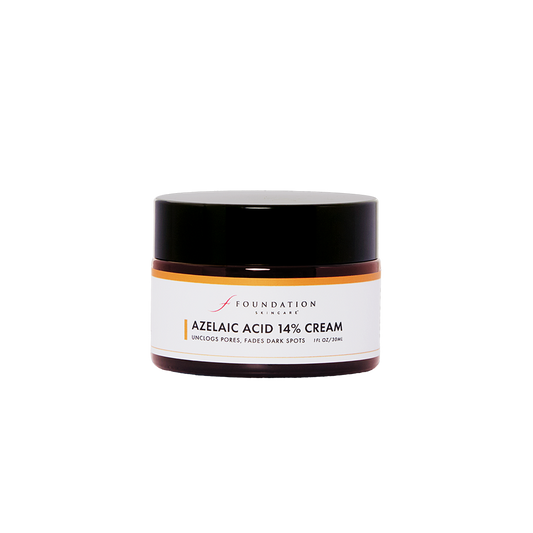
Azelaic Acid 14% Cream
• Brightens skin, fades brown spots
• Unclogs pores, improves texture
Azelaic Acid Gel: Benefits & Uses
Azelaic acid gels are often recommended for those with oily skin because of their quick absorption. With a fluid-like consistency, these products are lightweight and typically do not leave behind a residue.
Formulation & Texture:
Azelaic acid gels are generally mass-produced and prepared in a gel formulation to boost their solubility. They can feel lighter on the skin due to their fluid-like consistency but are not as hydrating because they dry so quickly.
Benefits of Azelaic Acid Gel
Azelaic acid in a gel-based form can deliver the active ingredient more quickly into the skin and it won’t leave behind a sheen on the skin or appear greasy. However, its fast absorption can make skin feel dried out, tight, or irritated.
Application
Here’s how to use azelaic acid gel:
-
Wash skin and pat dry.
-
Apply azelaic acid to dry skin in a thin layer. It can be gently massaged into the skin.
-
After it is fully absorbed, you can follow up with your other skincare products as directed by your dermatologist.
Azelaic Acid Gel vs. Cream: Key Differences
Still not sure which azelaic product is right for your skin? Review these key differences between creams and gels:
-
Azelaic creams are more suitable for dry or sensitive skin due to their moisturizing effect.
-
Gels are generally more drying and can be more irritating to sensitive skin.
-
Creams absorb slowly and won’t leave behind a sticky residue.
-
Azelaic gels absorb quickly, which may deliver ingredients faster and penetrate more deeply, but they can also cause tightness and flakiness due to this fast absorption rate.
How to Choose Between Azelaic Acid Gel and Cream
Some dermatologists suggest cream-based azelaic acid products for sensitive or dry skin due to their slow absorption and moisturizing qualities. Gels are generally recommended for those with oily skin. FS Azelaic Acid 14% Cream is formulated to be suitable for all skin types, whether you suffer from excess oil, dryness, or sensitive skin. It powerfully soothes and manages without stinging, redness, or irritation, and will not leave behind a greasy residue.
My Expert Opinion
If I only had access to one skin care ingredient for my patients, this would be it. So much can be accomplished using this natural molecule, whether you are looking for a more even skin tone, improved skin texture, less acne, less redness, or simply healthier, brighter skin.
The Bottom Line
Azelaic acid gel and cream both deliver the same active ingredient, but the formulation can make a big difference for some skin types. Here’s what you should know:
-
Creams are typically better for sensitive or dry skin. Azelaic acid cream absorbs more slowly and often includes moisturizing ingredients, which can help reduce irritation and support the skin barrier.
-
Gels may work well for oily skin, but they can be drying. Azelaic acid gel absorbs quickly and feels lightweight, but this fast absorption can sometimes lead to tightness or flaking.
-
The right choice depends on your skin type and goals. If you’re treating acne, rosacea, or dark spots and want a more tolerable option, a cream-based formula may be easier to use consistently long-term.
Learn more about the benefits of azelaic acid cream and explore more skincare tips in the FS Journal.
FAQs
What’s the difference between azelaic acid gel vs. cream?
The main differences between azelaic acid gel vs. cream is texture and absorption. Gels are lightweight and fast-absorbing, while creams are thicker, more hydrating, and generally better tolerated by sensitive skin.
Is azelaic acid gel or cream better?
It depends on your skin type. Azelaic acid gel may be better for oily skin, while azelaic acid cream is typically better for dry, sensitive, or redness-prone skin.
What are the benefits of azelaic acid cream?
The benefits of azelaic acid cream include increased hydration, reduced irritation, and improvement for conditions like acne, rosacea, and hyperpigmentation. Creams are often easier to use consistently, especially if you have sensitive skin.
Can you use azelaic acid every day?
Yes, azelaic acid can typically be used once or twice daily. If you have sensitive skin, it’s best to start slowly and increase frequency as you build tolerance.
Which is better for rosacea: azelaic acid gel or cream?
Both forms can help, but azelaic acid cream is preferred for rosacea because it’s less likely to cause irritation.
References:
-
Markiewicz-Tomczyk AG, et al. (2022). Clinical evaluation of anti-aging effects of combined therapy-Azelaic acid, phytic acid, and vitamin C applied layer by layer in females with Fitzpatrick skin types II and III. https://pubmed.ncbi.nlm.nih.gov/36056802/
-
Petrovici AN, et al. (2025). A Comprehensive Review of Azelaic Acid Pharmacological Properties, Clinical Applications, and Innovative Topical Formulations. https://www.mdpi.com/1424-8247/18/9/1273
-
Sauer NA, et al. (2024). The multiple uses of azelaic acid in dermatology: mechanism of action, preparations, and potential therapeutic applications. https://pmc.ncbi.nlm.nih.gov/articles/PMC10809820/


